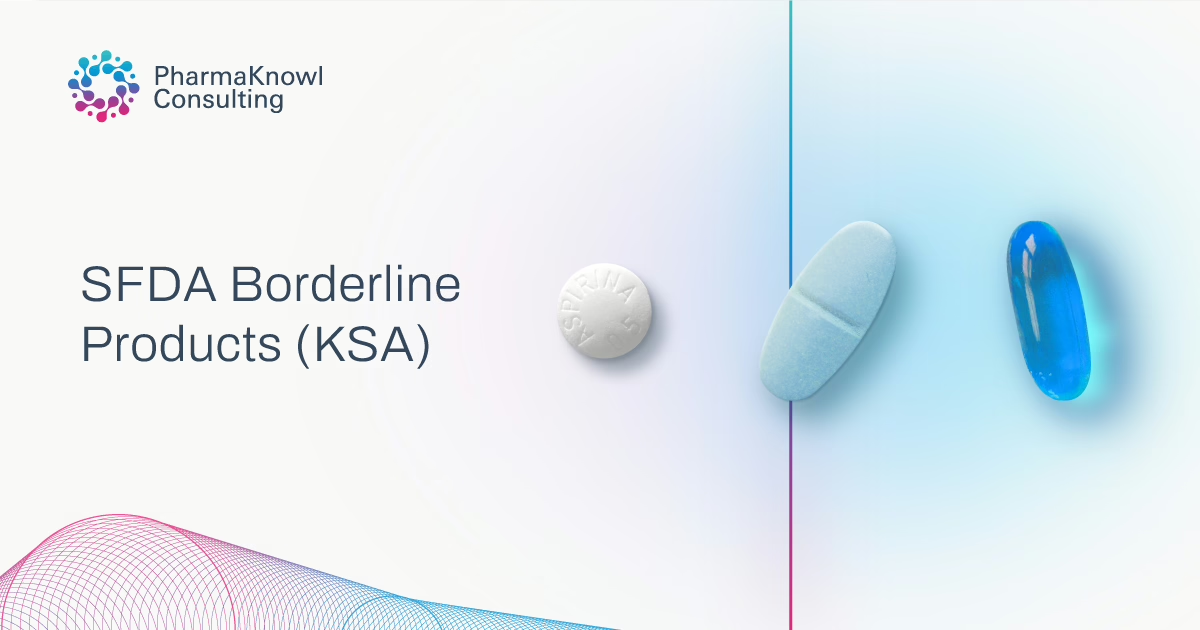
Borderline products in Saudi Arabia are products that fall between two or more classes of drugs, pharmaceuticals, food, cosmetics, and medical devices, and are among the most complex areas under the Saudi Food and Drug Authority (SFDA) regulatory rules. If proper classification is not accurately determined, such products may create uncertainty for companies planning to file a product registration.
Accurate classification of borderline products under SFDA regulations helps applicants avoid legal risks and unnecessary delays that can extend timelines and risk investments.
This article discusses how the SFDA has established guidance and classification procedures to support the handling of borderline products.
What are Borderline Products?
Borderline products are those that share characteristics or features of different main product categories regulated by the SFDA. For example, they may have characteristics of both food and drug, or cosmetic and medical device, that cannot be appropriately classified within available definitions due to composition, intended use, presentation, or labeling or advertising claims.
How Classification Matters
Classification impinges on every stage of the regulatory process, for example:
- Pathway for Submission: Whether it will follow the path of a drug, food, cosmetic, or device.
- Registration Claims and Marketing: How companies label the products for the consumers and healthcare professionals.
- Regulatory Timelines: Ensures faster reviews, with no rejections or resubmissions.
- Market Confidence: Trust among regulators, patients, and consumers.
Borderline Product Categories
1. Drug-Food Borderline Products
Examples
- Herbal Capsules for Diabetes Management
- Food supplements with pharmaceutical ingredients
- Supplements containing vitamins or minerals above the upper safe limit
Classification Approach:
- Products making therapeutic claims (or) acting by pharmacological, immunological, or metabolic means are classified as a medicine and require a drug registration application.
- Products intended mainly for nutrition, taste, or hydration and not related to disease are classified as food.
2. Cosmetics and Borderline Cases
Examples
- Moisturizers making claims to relieve joint pain
- Cleansing wipes containing antiseptic ingredients
- Oral care products marketed for the treatment of gums
Approach to Classification
- External products with cosmetic purposes (cleaning, perfuming, altering appearance) will only require cosmetic registration in Saudi Arabia.
- Products with therapeutic claims or containing active medicinal substances can be registered as drugs or medical devices.
- Ingested or mucosal (eye, nose, genital) products are not cosmetics.
3. Medical Device Borderline Products
Examples
- Physical-acting sore throat lozenges͏
- Wound irrigation solutions containing antimicrobial agents
- Tooth-whitening products inside the tooth
Classification Approach
- Products with a primary physical or mechanical intended action require medical device registration.
- Products that act by pharmacological or metabolic mechanisms are classified as drugs.
- Some products with mixed functions are classified on a case-by-case basis.
SFDA Criteria
Factors that SFDA considers in identifying the pathway for borderline products are:
Intended Use and Claims
- SFDA reviews the product’s primary intended use as indicated in its labeling, advertising, or any claims made for it.
- For example, if a product makes any claims regarding treatment or prevention of disease, it falls under the definition of a drug.
Mode of Action and Composition
- Any product containing pharmacologically active substances or a composition that supports body functions falls under the class of pharmaceutical drugs.
- Products bearing nutritional or non-therapeutic claims are regulated as food or dietary supplements.
Form of the Product
The form (oral, topical, injectable, etc.) shall be considered but not relied upon solely for classification.
Borderline Examples
| Product | Description | Classification |
|---|---|---|
| Psyllium Husk (Ispaghul) Powder | Presented as dietary fiber without therapeutic claims. | Food Product |
| Probiotic & Prebiotic Sachet | Contained probiotics and extracts; promoted for preventing tooth decay. | Drug Product |
| Senna Tea Bag | Traditional herbal tea with laxative claims. | Herbal Drug Product |
| Vitamin C Effervescent Tablet | Complied with food supplement standards, within safe limits. | Food Product |
| Collagen + Rosehips Sachet | Claimed joint protection and improvement. | Drug Product |
| Green Tea + Black Pepper Extract | Capsule form, labeled as nutritional, no therapeutic claims. | Food Product |
| Eucalyptus Oil Ointment | Marketed for muscle/joint pain relief. | Drug Product |
| Eye Gel with Tea Tree Oil & Hyaluronic Acid | Moisturizing and hydrating eye gel. | Cosmetic Product |
| Hyaluronic Acid Eye Drops | An eye lubrication product that did not meet drug criteria. | Medical Device |
| Escin Suppository | Herbal suppository for hemorrhoid relief, pharmacological effect. | Kill bacteria and viruses, the main action is pharmacological. |
| Artificial Saliva / Saliva Replacement | Presented for oral dryness, mechanical action only. | Medical Device |
| Human Antiseptic Wipes (Chlorhexidine) | Kills bacteria and viruses, the main action is pharmacological. | Health Drug Product |
| Nailner Solution & Brush | Treated fungal nail infections via metabolic action. | Drug Product |
Registration Support
PharmaKnowl will assist you in navigating borderline cases with clarity and confidence.
Let’s discuss your case and provide a complimentary consultation during an exploratory call.
Read More:
About the Author

Published by regulatory affairs team in PharmaKnowl, Riyadh office.
Resources

Services
Events