
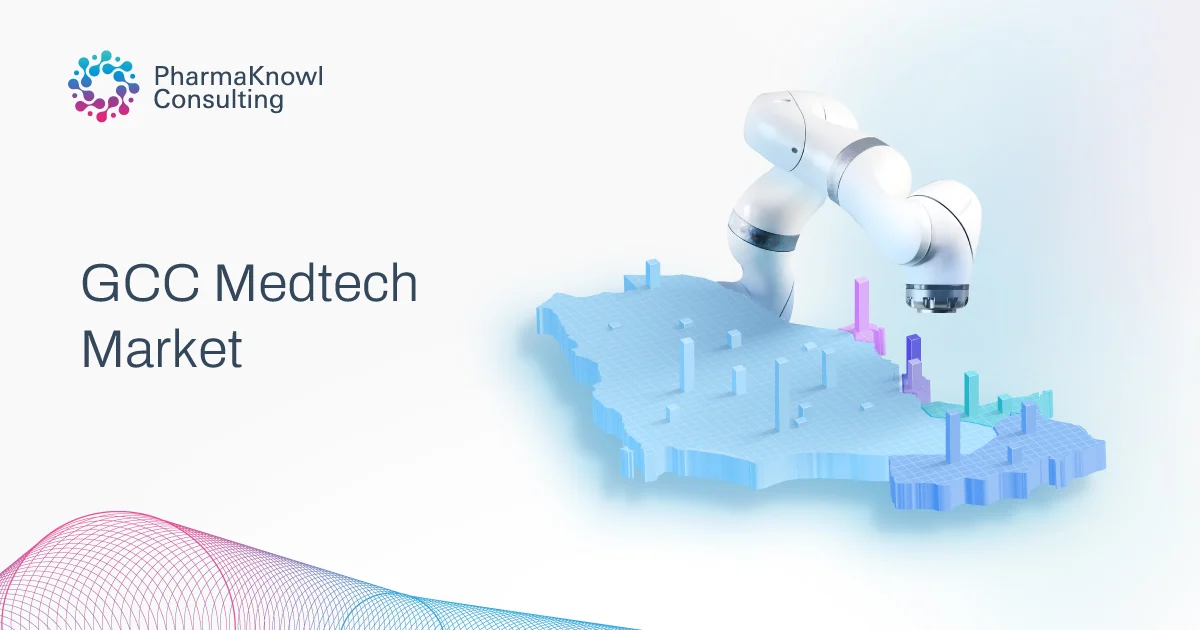
The GCC MedTech sector (medical devices) is one of the world’s fastest-growing markets, driven by strong government investment, a rising chronic disease burden, population growth, and digital health transformation. Collective healthcare expenditure is projected to reach USD 170.5 billion by 2030 at a CAGR of 5.9%, with medical devices, IVD, AI tools, surgical robotics, and digital platforms leading the expansion.
Saudi Arabia dominates with 56-60% of GCC healthcare and device spending, while the UAE leads in digital health adoption and innovation speed. Qatar, Kuwait, Oman, and Bahrain offer targeted opportunities through modernizing regulations and infrastructure projects. The region shows high demand for cardiology, diabetes care, imaging, wearables, and remote monitoring solutions.
Key Growth Drivers Reshaping GCC MedTech
The GCC MedTech sector is driven by structural, epidemiological, policy, and technological forces embedded in national strategies and demographics.
1. Chronic Disease Burden:
Non-communicable diseases cause over 70% of deaths in the region, with cardiovascular conditions at 45% (WHO). Diabetes prevalence ranges from 11.8% in Oman to over 20% in Kuwait and Bahrain. High obesity, hypertension, and renal disease rates create sustained demand for monitoring, diagnostic, and therapeutic devices, pushing investment in preventive and remote technologies.
2. Government Investment and National Visions:
All GCC states prioritize healthcare in their national visions (Saudi Vision 2030, UAE We the UAE 2031, etc.). Saudi Arabia allocated USD 69 billion for health in 2025, including USD 1.5 billion for health technology. UAE’s federal healthcare budget reached AED 71.5 billion. These funds support privatization, smart hospitals, and large-scale MedTech procurement.
3. Digital Health and AI Integration:
The Middle East digital health market is projected to grow from USD 11.45 billion in 2024 to USD 89.87 billion by 2034 (CAGR 22.88%). AI in healthcare is expected to hit USD 8.39 billion by 2033 (CAGR 36.99%). National platforms like Saudi Arabia’s Sehhaty (31M users), the UAE’s Malaffi, and Qatar’s EHR drive demand for AI tools, robotics, telemedicine, and connected devices.
4. Regulatory Modernization and Harmonization: Regulators’ Rapid Advancements:
SFDA issued AI/ML and digital health guidance; UAE consolidated services via EDE; Kuwait, Oman, and Bahrain introduced new registration pathways. These changes deliver faster approvals, clearer rules, and a more predictable, investor-friendly environment across the GCC.
5. Hospital Infrastructure Expansion and Privatization:
Saudi Arabia is privatizing 290 hospitals, targeting 65% private delivery, and expanding the Seha Virtual Hospital. The UAE is pursuing Operation 300bn, while Qatar’s Sidra Medicine and Kuwait’s hospital upgrades drive major procurement in imaging, surgical, and monitoring systems.
6. Medical Tourism and Localization Mandates
GCC countries are building medical tourism hubs, increasing demand for premium devices. Localization policies, such as Saudi Arabia’s 40%+ local value requirement and the UAE’s manufacturing push, are shifting markets from pure importers to emerging production bases, creating new partnership opportunities.
GCC MedTech by Country: Stats and Insights
1. Saudi Arabia: The Kingdom Leading GCC MedTech Transformation
| Key Numbers | |
| Market share (2025) | USD 6.5 Billion |
| Projected Market share (2032) | USD 9.1 Billion |
| CAGR (2032) | 5.0% |
| Healthcare expenditure as a percentage of GDP | 5.7% – 6.4% |
| Import dependency | 90% |
- The Saudi Arabia Cardiovascular Devices Market is projected to expand from USD 527.33 million in 2025 to USD 554.80 million in 2026, and is expected to reach USD 715.19 million by 2031. Source
- Under Vision 2030, the Kingdom earmarked USD 1.5 billion specifically for health technology adoption, accelerating deployment of telemedicine, electronic health records, and AI-powered diagnostics. Source
- In April 2025, the Ministry of Health inaugurated infrastructure projects worth over SAR 1.8 billion, encompassing new hospital towers, dialysis units, and specialized clinics, directly boosting procurement of medical equipment and consumables. Source
- Saudi Arabia’s Global Health Exhibition (GHE) 2025 in Riyadh generated USD 35.5 billion in signed deals and partnerships, a six-fold increase from prior years, establishing it as the largest medtech procurement event in the MENA region. Source
- The GCC recorded over 400 healthcare M&A and investment transactions between 2021 and 2025, with Saudi Arabia accounting for 170 transactions, second only to the UAE’s 198, and together the two countries representing nearly 92% of all GCC deal volume. Source
- The WHO (2023) recorded a road accident fatality rate of 28.8 per 100,000 people in Saudi Arabia, a significant driver of demand for surgical and emergency medical devices. Source
- The diagnostic devices segment generated approximately USD 3.57 billion in 2024, representing the largest single product segment in the Saudi medical devices market. The medical imaging sub-market alone is projected to reach approximately USD 1.5 billion by 2025 at a CAGR of approximately 8%. Source
- The Saudi reprocessed medical devices market generated USD 7.8 million in 2024, projected to reach USD 21.1 million by 2030 at a CAGR of 18.2%. The cardiovascular segment held the largest share at 66.67% in 2024, and Saudi Arabia accounted for 0.4% of the global reprocessed medical devices market. Source
- The Central Region, anchored by Riyadh, accounted for 35.84% of total health insurance premiums in the Kingdom of Saudi Arabia in 2025, driven by the concentration of large employers, government entities, and Vision 2030 national projects. Source
- Saudi Arabia’s Local Content and Government Procurement Authority (LCGPA) requires a minimum 40% added local value for medical device product approval in government procurement tenders. Increased minimum local content percentages were announced in February 2026, effective August 2028. Source
- In September 2025, a Saudi hospital performed the world’s first fully robotic-assisted heart transplant surgery on a 16-year-old patient, a landmark medtech milestone reflecting the Kingdom’s advanced surgical technology adoption capacity. Source
- Saudi Arabia dominated the Middle East digital health market by revenue share in 2024. The Middle East digital health market was valued at USD 11.45 billion in 2024, projected to reach USD 89.87 billion by 2034 at a CAGR of 22.88%. Source
- Saudi Arabia’s digital health platform Sehhaty reported 31 million active users, demonstrating the scale of national digital health infrastructure underpinning medtech adoption across the Kingdom. Source
- The Middle East AI in healthcare market was valued at USD 435.63 million in 2024 and is projected to reach USD 8.39 billion by 2033 at a CAGR of 36.99%. Robot-assisted surgery held the largest application share at 13.50% in 2024. Source
United Arab Emirates: The Innovation Hub of the Middle East
| Key Numbers | |
| Market share (2025) | USD 3.18 Billion |
| Projected Market share (2032) | USD 4.71 Billion |
| CAGR (2032) | 5.8% |
| Healthcare expenditure as a percentage of GDP | 4–5.3% |
| Import dependency | 85% |
- The UAE Cardiovascular Devices Market was estimated at USD 227.26 million in 2026 and is projected to reach USD 302.31 million by 2031, registering a Compound Annual Growth Rate (CAGR) of 5.87% during the forecast period. Source
- In 2024, the United Arab Emirates accounted for 1.2% of the global smart medical devices market in terms of revenue. Source
- The United Arab Emirates medical device contract manufacturing market generated revenue of USD 387.6 million in 2024 and is projected to reach USD 681.3 million by 2030, growing at a CAGR of 10.1% during the period 2025-2030. Source
- By 2050, UAE residents aged 60 and above are expected to account for 29% of the total population, up from under 10% today, establishing long-term structural demand for specialist and eldercare medical devices. Source
- In 2023, the UAE introduced regulatory fast-tracking for clinic-based diagnostic equipment, accelerating market entry for device manufacturers and positioning ambulatory clinics as a high-growth procurement channel. Source
- The UAE consolidated 44 regulatory services from MOHAP through the EDE platform in January 2025, and introduced new anti-monopoly distribution requirements in February 2026, further modernizing the national medtech regulatory architecture. Source
- The Clinics segment across the Middle East is projected to achieve a CAGR of 10.7% from 2025 to 2033, driven by the expansion of specialty outpatient facilities in dermatology, fertility, ophthalmology, and dental care in urban UAE centers. Source
- Class II medical devices dominate the UAE and broader Middle East market with a 65.2% revenue share in 2023, attributed to technological advancements in surgical instruments and blood glucose meters. Source
- Hospitals account for the largest end-user revenue share at 62.8% across the Middle East in 2023, with UAE hospitals investing in advanced devices across cardiology, oncology, and neurology departments. Source
- The MENA medical device market was valued at USD 24.61 billion in 2025, projected to reach USD 34.95 billion by 2032 at a CAGR of 5.1%, with the UAE ranked as the second-largest individual country contributor to market revenue. Source
- In May 2025, MedIQ secured USD 6 million in Series A funding to scale AI-driven digital health platforms, including EHR systems, revenue cycle tools, telehealth services, and AI-based clinical support, across the UAE, Saudi Arabia, and Qatar. Source
- In 2023, the UAE introduced regulatory fast-tracking for clinic-based diagnostic equipment, accelerating market entry for device manufacturers and positioning ambulatory clinics as a high-growth procurement channel. Source
QATAR: Advancing Smart Healthcare Under National Vision
| Key Numbers | |
| Market share (2025) | USD 1,175.5 Million |
| Projected Market share (2034) | USD 1,945.5 Million |
| CAGR (2034) | 5.58% |
| Healthcare expenditure as a percentage of GDP | 2.5% |
| Import dependency | 85% |
- The Qatar Medical Devices Market is projected to grow at a CAGR of 6% from 2025 to 2031. Growth rates are forecast at 5.61% in 2025, climbing to a high of 12.86% in 2027, and moderating to 0.87% by 2029. Source
- Qatar’s Healthcare IT market reached USD 812.1 million in 2025. The market is projected to reach USD 1,861.1 Million by 2034, at a CAGR of 9.36%, driven by widespread AI adoption and substantial government investment in healthcare technology infrastructure. Source
- Qatar’s Personalized Medicine market reached USD 1,251.81 Million in 2025 and is projected to reach USD 2,587.03 Million by 2034 at a CAGR of 8.40%, driven by genomic sequencing programs and AI-powered diagnostic integration. Source
- Qatar’s digital health market is valued at USD 580 million, driven by telehealth adoption, AI integration, and government initiatives for electronic health records (EHR) and smart hospital deployment. Source
- Qatar’s AI sector is forecast to grow from QAR 2 billion in 2024 to QAR 7 billion by 2030 at a CAGR of 29%, per the Qatar Development Bank (QDB), with healthcare AI constituting a primary adoption vertical. Source
- The centralized electronic health record system in Qatar covers approximately 80% of healthcare providers, providing the data interoperability infrastructure required for AI-mediated medtech applications. Source
- Lillia (formerly DroobiSmit/Droobi Health) secured USD 1.7 million in funding from the Qatar Research, Development, and Innovation Council to develop a groundbreaking digital twin system designed to monitor, predict, and personalize care for chronic disease patients. Source
- In 2024, telemedicine platforms facilitated 1.5 million virtual consultations in Qatar, while AI-powered diagnostic tools achieved 95% accuracy for cancer and cardiovascular disease detection. Source
- Non-communicable diseases account for over 70% of all deaths in the Eastern Mediterranean region, including Qatar, with cardiovascular conditions responsible for 45% of fatalities, necessitating widespread deployment of cardiac monitoring and therapeutic devices. Source
- AI imaging integration across diagnostic tools is projected to reach approximately 75% of diagnostic platforms in Qatar by 2025, reflecting substantial progress under the Qatar National Health Strategy 2024–2030. Source
- The Qatar home healthcare market reached USD 1.8 billion in 2025, reflecting accelerating demand for remote monitoring devices, home-based diagnostics, and telehealth-integrated wearables. Source
- The total GCC healthcare innovation market is estimated to reach USD 170.5 billion by 2030 at a CAGR of 5.9%, with Qatar contributing a growing share through strategic investments aligned with Qatar National Vision 2030 healthcare objectives. Source
- The IVD segment is the fastest-growing medical device category across the Middle East, projected at a CAGR of 11.2% from 2025 to 2033, with Qatar’s infectious disease surveillance, prenatal screening, and chronic disease monitoring programs as primary demand drivers. Source
- The broader Middle East medical device market was valued at USD 6.0 billion in 2024 and is projected to reach USD 9.0 billion by 2033 at a CAGR of 4.6%, with Qatar positioned among the top three individual country contributors to regional market growth. Source
KUWAIT: Vision 2035 Driving Healthcare Modernization
| Key Numbers | |
| Market share (2025) | USD 812.8 Million |
| Projected Market share (2033) | USD 1.31 Billion |
| CAGR (2033) | 6.2% |
| Healthcare expenditure | 5.1% |
| Import dependency | 85% |
- The Kuwait medical devices reimbursement market generated USD 1.267 billion in 2024 and is projected to reach USD 1.936 billion by 2030 at a CAGR of 7.3%. Kuwait accounted for 0.2% of the global medical devices reimbursement market in 2024. Source
- Kuwait enacted Ministerial Decree 387/2025, establishing three IVD registration pathways: standards, fast-track, and abridged, marking a significant regulatory modernization milestone for the country’s medical device governance framework. Source
- Diabetes prevalence in Kuwait exceeds 20% of adults, among the highest rates globally, establishing structural demand for glucose monitoring systems, insulin delivery devices, and continuous remote patient monitoring technologies. Source
- In February 2024, GE HealthCare supplied imaging systems under Kuwait’s public hospital redevelopment plans, supporting diagnostic capacity upgrades within refurbished facilities, a primary market entry mode for international OEMs in Kuwait. Source
- A South Korean medical imaging manufacturer expanded its Kuwait footprint in March 2024 through a regional distribution partnership, reflecting growing interest from Asian OEMs in Kuwait’s government-led hospital modernization cycles. Source
- The Kuwait bariatric surgery devices market generated a revenue of USD 19.9 million in 2023 and is expected to reach USD 33.9 million by 2030, growing at a compound annual growth rate (CAGR) of 7.9% during the forecast period from 2024 to 2030. Among procedure segments, Roux-en-Y Gastric Bypass (RYGB) accounted for the largest share of revenue in 2023. Source
- In Kuwait, endoscopes were the largest revenue-generating product segment in colorectal surgery in 2024, emphasizing the role of laparoscopic techniques in this specialty. Source
- The Kuwait medical device clinical trials market generated a revenue of USD 41.8 million in 2024 and is expected to reach USD 46.8 million by 2030. Source
- With a USD 10 billion healthcare budget, plans for 10 new hospitals, the country’s first major pharmaceutical factory, and the Middle East’s first public-private healthcare partnership, Kuwait is translating financial muscle into structural transformation under Vision 2035. Source
- The Kuwait medical device market is experiencing a surge in demand for advanced technologies, driven by a healthcare expenditure of approximately $5.0 billion in the future. Source
OMAN: Vision 2040 Powering Sustainable Healthcare Growth
| Key Numbers | |
| Market share (2025) | USD 525.9 Million |
| Projected Market share (2033) | USD 860.6 Million |
| CAGR (2033) | 6.3% |
| Healthcare expenditure | 3.49% |
| Import dependency | 85% |
- Oman’s Digital Health & AI market has reached USD 17 million in the first quarter of 2026. The market is projected to reach USD 30 million by 2030, at a CAGR of 17.4%. Source
- Oman’s value-based healthcare services market is valued at USD 1.1 billion, driven by demand for outcome-linked care, an aging population, and digital health adoption for improved patient outcomes. Source
- Diabetes affects 11.8% of adults in Oman, while hypertension is also widely prevalent. Together, these cardiometabolic conditions are responsible for approximately 70% of renal failure cases in the country, driving demand for dialysis, nephrology, and monitoring devices. Source
- In August 2025, TrioTree Technologies introduced an AI-driven voice-to-data solution capturing doctor-patient conversations in 178 languages, integrated with Oman’s FSA-regulated Dhamani health insurance platform, a significant AI-medtech convergence milestone in the Omani healthcare system. Source
- In Oman, Imaging and PACS solutions are gaining strong traction, supported by the Ministry of Health’s February 2026 agreement with OQEP to deploy PACS across 10 referral hospitals. Source
- The Oman medical device outsourcing market generated revenue of USD 379.0 million in 2025 and is projected to reach USD 492.7 million by 2033. Source
- The Oman E-Health Market is valued at USD 80 million, based on a five-year historical analysis. This growth is primarily driven by the increasing adoption of digital health solutions, government initiatives to enhance healthcare accessibility under the national digital transformation agenda, and the rising demand for telemedicine services, especially in remote areas. Source
- The telemedicine sector in Oman is projected to reach OMR 20 million in the future, driven by a growing population of over 5 million and increasing healthcare accessibility. Source
- The Oman healthcare contract development and manufacturing organization market generated a revenue of USD 470.1 million in 2024 and is expected to reach USD 819.1 million by 2033. Source
- The Oman healthcare contract development and manufacturing organization market generated a revenue of USD 470.1 million in 2024 and is expected to reach USD 819.1 million by 2033. Source
- In terms of revenue, Oman accounted for 0.2% of the global healthcare contract development and manufacturing organization market in 2024. Source
Bahrain: Strategic Healthcare Development in the GCC
Key Numbers
| Key Numbers | |
| Market share (2025) | USD 382.5 Million |
| Projected Market share (2033) | USD 588.5 Million |
| CAGR (2033) | 5.5% |
| Healthcare expenditure | 4% |
| Import dependency | 85% |
- Bahrain’s licensed healthcare delivery network comprises 924 licensed facilities and 22,060 active licensed professionals, serving a population of 1,588,670. Source
- The total healthcare expenditure in the Kingdom of Bahrain is projected to increase from US$1.8 billion in 2022 to US$2.2 billion by 2027. Source
- Out of Bahrain’s total patient population, an estimated 22.1% of individuals are living with diabetes, reflecting its significant burden. Source
- Cardiovascular diseases account for an estimated 14.8% of Bahrain’s total patient population, reflecting a significant public health concern. Source
- The Bahrain healthcare system is supported by approximately 1.5 physicians and 3.0 nurses per 1,000 population, along with around 20–25 hospitals and nearly 2,500-3,000 hospital beds across public and private healthcare facilities. Source
- Bahrain records a notably high prevalence of hereditary blood disorders, with approximately 2% of newborns affected by sickle cell disease, while nearly 18% of the population carries the sickle cell trait and around 24% are carriers of thalassemia, highlighting a significant genetic disease burden in the country. Source
- Bahrain imported adhesive medical dressings worth USD 2.26 million at a volume of 64,062 kilograms, while medical oxygen imports reached 172,056 cubic meters valued at USD 54,720. Source
- Cardiovascular diseases constitute a significant health burden in the Kingdom of Bahrain, accounting for approximately 53.8% of total deaths according to national non-communicable disease data. Source
- In Bahrain, electronics technology constitutes the leading segment of the medical devices market, holding a 38% market share, while the robotics and biotechnology segments are experiencing rapid growth. Source
- In Bahrain, the capital city of Manama commands approximately 39% of the national medical devices market. Source
- In Bahrain, hospitals account for the dominant share of the medical devices market, representing approximately 47% of total demand. Source
GCC MedTech Outlook and Opportunities
- Market Doubling: The GCC medical devices market is on track to grow from USD 13 billion in 2025 to USD 28.2 billion by 2035. For manufacturers and distributors already in the region, that is a near-doubling of the addressable market within a decade. Source
- Fastest-Growing Segments: The GCC Connected Medical Devices & Wearables Market was valued at approximately USD 1.65 billion in 2025, USD 1.87 billion in 2026, and is projected to reach nearly USD 4.49 billion by 2032, registering a CAGR of around 18.16% during 2026–2032. Source
- Regulatory & Localization Push: New registration frameworks in Oman, Bahrain, and Kuwait, alongside Saudi Arabia’s minimum 40% local value requirements and the UAE’s Operation 300bn, make localization and regulatory compliance essential for government tender eligibility and market access. Source
- Medical Tourism & Privatization: Expansion of medical tourism in Saudi Arabia, UAE, and Qatar, together with the privatization of 290 hospitals in Saudi Arabia, is creating premium procurement channels and new commercial partnerships. Source
Conclusion:
The GCC MedTech market is at a turning point. Six countries are undergoing deliberate, coordinated transformation, regulations written, deadlines set, and digital health infrastructure built at the national scale.
Saudi Arabia leads with binding AI/ML device guidance, USD 69 billion in health spending, and 290 hospitals entering privatization. Oman and Bahrain have formalized their device registration frameworks within the past 12 months. Qatar and the UAE are operating some of the most digitally integrated healthcare systems in the world. Underpinning all of it is a disease burden that guarantees demand: diabetes exceeding 20% in Kuwait and Bahrain, cardiovascular disease causing 45% of regional deaths, and a connected devices market growing at 20.19% annually.
The GCC is no longer emerging. It has arrived. The question for any MedTech company operating in or considering this region is no longer whether the market is ready; it is whether they are.
About the Author

Regulatory Editor
Resources
Services
Events